Vietnam: Hanoi, Halong Bay & Pu Luong — A Curated Route
11-day itinerary
An 11-day route from Hanoi to Ho Chi Minh City, pairing city highlights with an overnight junkboat on Halong Bay and a multi-day trek through the rice terraces of the Pu Luong Nature Reserve.
This route is designed for travelers who know Vietnam's main axis but want a more considered path through it. The itinerary trades the usual flight from Hanoi for an overland journey into the Pu Luong Nature Reserve, an area of limestone karsts and rice terraces often compared to Sapa but with a fraction of the foot traffic. The pacing is deliberate, with private transport and select boutique properties that prioritize quiet and design over central-but-crowded locations. It’s a route that values craft over convenience.
🧭 Luxury
Book Vietnam: Hanoi, Halong Bay & Trekking Pu Luong by G Adventures.
From $3,399 USD · 11 days · max 15 travelers · Boutique hotels + private transfers + internal flights + most meals trip code AVHGPrices in USD. Your local currency is shown on G Adventures.
Each leg of the journey mapped out — where the day takes you, what's actually on the ground, and things to consider when planning this tour.
Day 1 of 11
Hanoi
Arrival in Hanoi & A Taste of the North
Arrive in Hanoi, where a private transfer is waiting to navigate the city's kinetic energy. Settle into your hotel in the Old Quarter before an evening introduction to northern Vietnamese cuisine. A multi-course dinner features dishes like sizzling ginger chicken and fresh mango salad, capped with a tableside preparation of Hanoi's signature egg coffee.
Been to Hanoi?Create an account
and share your photos with other travelers planning this trip.
Day at a glance
Private airport transfer on arrival.
Stay at the Bespoke Trendy Hotel in Hanoi's Old Quarter.
Welcome dinner featuring a multi-course Vietnamese menu.
Experience a tableside preparation of traditional egg coffee.
DIY Reality Check: Upon arrival at Hanoi's Noi Bai Airport (HAN), the Australian government's Smartraveller service advises using only metered or pre-booked taxis, especially at airports, due to the risk of scams. Navigating the 30km journey to the Old Quarter involves sidestepping drivers who may approach you inside the terminal and locating the official, regulated taxi stand outside. Even with legitimate taxis, fare disputes, language barriers, and circuitous routes are common enough that visitors are advised to have their hotel address written in Vietnamese and track the route on their own phone. A pre-arranged transfer eliminates the need to vet operators, negotiate fares, or handle logistics after a long-haul flight.
The day begins on the back of a motorbike, navigated by women from a local organization that empowers female drivers. This is the definitive way to see Hanoi, weaving through traffic to reach the city’s key sites. The route circles the Ho Chi Minh Mausoleum complex, taking in Ba Dinh Square and the iconic One Pillar Pagoda, before visiting Huu Tiep Lake and the Tran Quoc Pagoda.
Lunch is a classic bowl of pho at a local spot in the Old Quarter. The afternoon continues on foot with a deep dive into Hanoi's street food scene. The focus is on finding the city's best Bun Cha, a grilled pork and noodle dish, before finishing at Bia Hoi corner for a glass of fresh local beer and some prime people-watching as the city transitions to evening.
Been to Hanoi?Create an account
and share your photos with other travelers planning this trip.
Day at a glance
City tour on the back of a motorbike with an all-female guide team.
Visit Ba Dinh Square, One Pillar Pagoda, and Tran Quoc Pagoda.
Lunch of traditional pho at a local Old Quarter restaurant.
Guided afternoon street food tour for Bun Cha and Bia Hoi.
Overnight at the Bespoke Trendy Hotel.
DIY Reality Check: Navigating Hanoi's chaotic traffic is a significant challenge, with government advisories highlighting the risk. The UK's Foreign, Commonwealth & Development Office warns that motorbike accidents are common, have injured British nationals, and advises renting only from reputable organizations. For a DIY traveler, this means vetting operators from a crowded market, ensuring they provide proper helmets—a legal requirement for passengers—and are adequately insured. Furthermore, foreign nationals involved in traffic accidents can be legally prevented from leaving Vietnam until an investigation is complete, a process that can be lengthy and involve out-of-court financial settlements. A pre-vetted tour with experienced, licensed local guides not only navigates the complex road rules but also mitigates the serious personal and legal risks of choosing an unvetted operator.
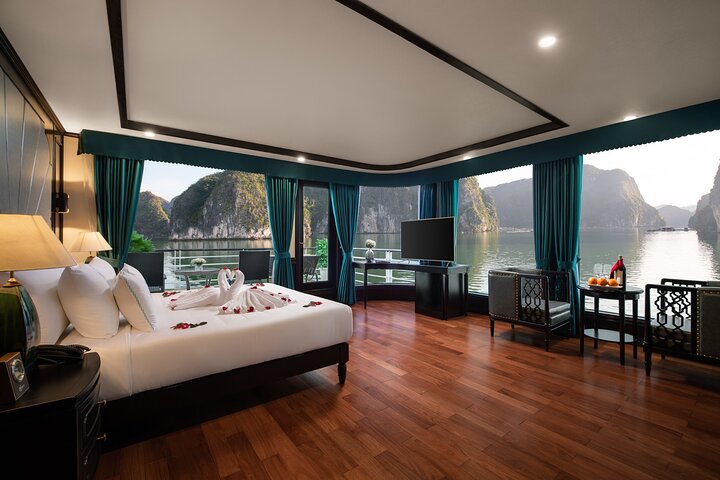
A private vehicle handles the morning's overland journey east from Hanoi to the coast. At the harbour, you board a private junk—a traditional sailing vessel refitted for comfort—for an overnight cruise through Halong Bay. The landscape is a watercolour of limestone karsts rising from emerald water. Lunch is served on board as the boat navigates deeper into the bay, featuring local seafood like steamed tiger prawns.
In the afternoon, the anchor drops for a kayaking excursion. Paddle into sea caves to see ancient fossilized shells embedded in the rock, evidence of the bay's geology. As evening approaches, there's an informal lesson in making fresh spring rolls on deck before a full dinner is served against the backdrop of the darkening karsts.
Been to Ha Long Bay?Create an account
and share your photos with other travelers planning this trip.
Day at a glance
Private overland transfer from Hanoi to Halong Bay (155km).
Overnight cruise on a private, traditional junk boat.
Multi-course Vietnamese lunch and dinner served on board.
Guided kayaking excursion through the bay's limestone caves.
Informal spring roll making class on deck.
DIY Reality Check: The UK government explicitly advises travelers to "Consider safety standards carefully before taking an overnight boat trip on Halong Bay," warning that poor standards have led to accidents and boats sinking without warning in past years. For the independent traveler, this means vetting an operator from a crowded market of over 500 registered tourist boats, a daunting task where verifying true compliance with provincial safety regulations—from fire suppression systems to crew certifications—is nearly impossible. Scams are common, with travelers reporting "bait-and-switch" schemes where the vessel provided is of far lower quality than what was advertised, or operators using misleading photos to secure bookings. A trip that bundles overland transport with a pre-vetted, licensed cruise partner removes the significant operational burden and safety risks of navigating this opaque market alone.