Iconic Japan: Tokyo to Kyoto

An Unfiltered Travel Guide & Photo Diary

Iconic Japan: Tokyo to Kyoto

  • The routeWritten as you'd travel it independently — where each day goes and what there is to do when you get there, following the same stops and activities G Adventures runs wherever you could arrange them yourself.
  • DIY Reality CheckWhere doing it yourself gets hard: permits, closures, bookings that sell out months ahead.
  • G Adventures includesBooked start to finish as one 12-day trip — you can't buy a single day of it. These panels show what their price covers each day, so you can weigh it against doing it yourself.

What It Takes to Coordinate This Route Yourself

Threading a stop into a city-to-city transfer on 4 days represents the primary coordination challenge. Self-planning means managing 14 transport legs—12 of which are scheduled public transport booked as ordinary tickets—alongside 25 activities. It also requires securing 11 nights of accommodation across 5 separate properties for the 12 days. The longest stays run 3 nights at the start and end of the route, while only 1 of the 5 stays is a single night. An organised route ultimately buys the precise timing needed to mesh these transit departures with the activities.

See how G Adventures handles it

Tokyo’s hyper-modern city blocks contrast sharply with the quiet, rural countryside of Tsumago-juku. Connecting these environments means taking the train to Nagiso station before embarking on a 1.5-to-2-hour walk past farms and rice paddies. Beyond the Kiso Valley, the route relies on rail transit to reach the Edo-period samurai quarter of Kanazawa.

Itsukushima Shrine, a 12th-century Shinto complex famed for its floating gate, stands in contrast to Hiroshima's Peace Memorial Park and the 17th-century feudal fortress of Himeji Castle.

The Route, Day by Day

Tokyo

Arrival in Tokyo

Day 1 of 12

Arrive in Tokyo, a metropolis where deep-rooted tradition and hyper-modernity exist on the same city block. This arrival day features no planned activities, allowing you to settle into your hotel, the Premier Hotel Cabin President Tokyo, and adjust to the time zone. The remainder of the day is yours to walk the immediate neighbourhood. You can explore the streets surrounding the hotel and experience this section of the city before the formal route begins.

On the ground

  • Settle into your hotel in Tokyo
  • Where you stay: Premier Hotel Cabin President Tokyo

Tokyo

Tokyo: Imperial Shrine & Pop Culture

Day 2 of 12

The day's exploration of Tokyo is a study in contrasts, navigated via the city's efficient public transit system. The itinerary begins at the Meiji Shrine, a tranquil, forested space dedicated to the deified spirits of Emperor Meiji and Empress Shōken, who presided over Japan's rapid modernization in the late 19th and early 20th centuries. The shrine's classic Shinto architecture stands in stark opposition to the day's second focus: the nearby Harajuku district.

A walk through Harajuku's crowded streets offers a direct look at contemporary Japanese youth culture, most notably the phenomenon of kawaii, or 'cuteness,' which permeates fashion, food, and social behaviour. This area provides a dense, observable case study in the trends that drive global pop culture.

On the ground

  • Explore the Meiji Shrine, dedicated to Emperor Meiji
  • Walk through the Harajuku district, a center of youth culture
  • Observe the cultural phenomenon of kawaii
  • Navigate the city using the public metro system
  • Where you stay: Premier Hotel Cabin President Tokyo

Tokyo

Tsukiji Market and Asakusa's History

Day 3 of 12

The morning is dedicated to Tokyo's formidable seafood industry with a visit to the Tsukiji Outer Market. While the famous inner-market tuna auction has relocated, the outer market remains a sprawling, energetic hub of vendors selling fresh and processed seafood, kitchen tools, and street food. The visit is followed by a practical lesson in sushi preparation, led by professional sushi chefs who instruct on how to select, fillet, and present fish.

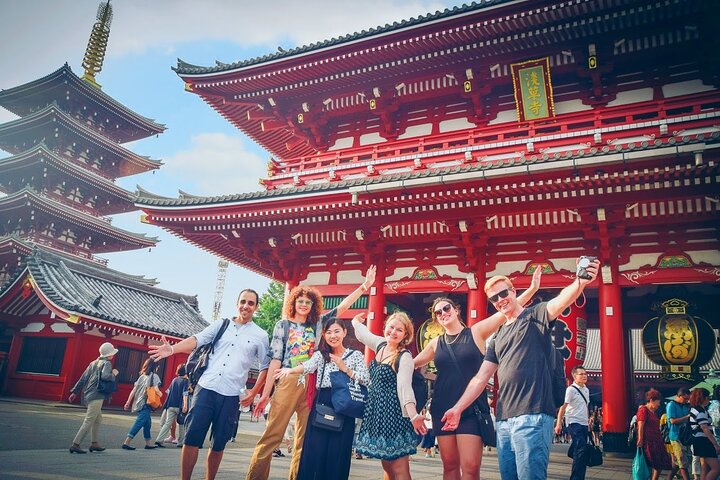
After a lunch of self-made sushi, the afternoon shifts to Asakusa, one of Tokyo's few districts to retain the atmosphere of older decades. A walk here leads to Sensō-ji, Tokyo's oldest temple, founded in the 7th century. The area's traditional shops and layout offer a glimpse into the city's pre-war commercial and religious life.

On the ground

  • Explore the bustling Tsukiji Outer Market
  • Participate in a sushi-making class with master chefs
  • Walk through the historic Asakusa district
  • Visit Sensō-ji, Tokyo's oldest Buddhist temple
  • Where you stay: Premier Hotel Cabin President Tokyo

Tsumago

The Edo Road to Tsumago-juku

Day 4 of 12

An overland journey by train leaves the urban density of Tokyo behind, heading for the mountains of the Kiso Valley. From Nagiso station, a 1.5-to-2-hour walk through rural countryside, past farms and rice paddies, leads to Tsumago-juku. This is one of the best-preserved post towns (shukuba) along the old Nakasendō highway, which connected Kyoto and Edo (now Tokyo) during the Edo period (1603-1868). The preservation of the town is a deliberate community effort; motorized traffic is banned from the main street during the day, and modern infrastructure like power lines is concealed. The night is spent at Hanaya Tsumago Ryokan, a traditional Japanese inn, which provides a multi-course kaiseki dinner focused on seasonal ingredients. The stay tonight involves the start of a luggage-forwarding chain; main bags are sent ahead to Kanazawa, so pack an overnight bag with everything needed until they reunite the next day. The cost for forwarding is around $20 USD per bag.

On the ground

  • Travel by train from Tokyo to the Kiso Valley
  • Walk through countryside to the preserved post town of Tsumago
  • Where you stay: a traditional Japanese inn (Hanaya Tsumago Ryokan)
  • Experience a multi-course kaiseki dinner
  • Luggage forwarded separately to Kanazawa

Kanazawa

Kanazawa's Samurai Quarter

Day 5 of 12

The route continues by rail to Kanazawa, a city that flourished as a major cultural and economic center during the Edo period. It was the seat of the Maeda clan, the second most powerful feudal lords after the Tokugawa shogun. Because it was spared bombing during World War II, its historical districts remain largely intact.

The focus here is the Nagamachi district, the former residential area for the city's samurai. A walk through its narrow lanes, past earthen walls and private entrance gates, leads to the Nomura-ke, a restored samurai residence. The house and its artifacts offer a direct view into the daily life, social standing, and aesthetic principles of Japan's elite warrior class.

On the ground

  • Travel by train to the historic city of Kanazawa
  • Explore the Nagamachi samurai district
  • Visit the restored Nomura Family Samurai Residence
  • Learn about the powerful Maeda clan of the Edo period
  • Where you stay: ANA Crowne Plaza Kanazawa

Kanazawa

Crafts, Geishas, and Hidden Defenses

Day 6 of 12

A full day in Kanazawa reveals its layered history. The first stop is Myōryū-ji, a temple popularly known as the 'Ninja-dera.' While its connection to ninja is folkloric, the temple was built by the Maeda clan with an array of defensive features, including hidden tunnels, secret rooms, and traps, designed to function as a disguised military outpost. The structure is a masterclass in architectural deception.

The afternoon shifts from martial to aesthetic traditions. A walk through the Higashi Chaya district, one of Kanazawa's historic geisha entertainment areas, showcases the elegant wooden ochaya (teahouses). The day also includes a hands-on workshop focused on gold-leaf application, a craft for which Kanazawa produces 99% of Japan's domestic supply. This involves decorating chopsticks, a practical application of a centuries-old art form. Note on logistics: tonight's onward leg again uses luggage forwarding — pack an overnight bag for what you'll need until the main bags arrive the next day. Extra-bag charges around $20 USD per bag.

On the ground

  • Visit Myōryū-ji, the 'Ninja Temple,' with its hidden defenses
  • Explore the historic Higashi Chaya geisha district
  • Participate in a gold-leaf chopstick painting workshop
  • Learn about Kanazawa's traditional crafts
  • Where you stay: ANA Crowne Plaza Kanazawa

Hiroshima

A Day of Reflection in Hiroshima

Day 7 of 12

Travel about three to three-and-a-half hours by shinkansen (bullet train) to Hiroshima, a city now defined by its post-1945 reconstruction and its global role as a center for peace advocacy. The day is centered on a visit to the Peace Memorial Park, located at the hypocenter of the atomic bomb explosion of August 6, 1945. The park's design and monuments are a deliberate, somber memorial to the estimated 140,000 people who died in the attack and its aftermath.

A walk through the grounds includes the Peace Memorial Museum, whose exhibits document the bombing from a humanistic perspective. Key outdoor monuments include the skeletal frame of the Gembaku Dome, the only structure left standing near the hypocenter, and the Children's Peace Monument, dedicated to Sadako Sasaki and the many child victims.

On the ground

  • Travel by bullet train to Hiroshima
  • Visit the Hiroshima Peace Memorial Park and Museum
  • See the Gembaku Dome, a UNESCO World Heritage Site
  • Reflect at the Children's Peace Monument and other memorials
  • Where you stay: ANA Crowne Plaza Hiroshima

Hiroshima

The Floating Gate of Miyajima

Day 8 of 12

A short ferry ride across the bay from Hiroshima leads to Itsukushima, an island more commonly known as Miyajima ('shrine island'). The island is considered sacred in Shintoism and is the site of the 12th-century Itsukushima Shrine. This UNESCO World Heritage site is constructed on piers over the water, giving it the appearance of floating on the bay during high tide.

Its most recognizable feature is the great torii gate, which stands in the water offshore and appears to float. The afternoon is unstructured, allowing for independent exploration of the island's temples, its lanes populated by wild but tame sika deer, or a hike up the slopes of Mount Misen for panoramic views of the Seto Inland Sea.

On the ground

  • Take a ferry to Itsukushima Island (Miyajima)
  • Visit the 12th-century Itsukushima Shrine, a UNESCO site
  • Photograph the iconic 'floating' torii gate
  • Where you stay: ANA Crowne Plaza Hiroshima

Kyoto

Himeji Castle and Kyoto's Gion District

Day 9 of 12

The morning's journey towards Kyoto is broken by a stop at Himeji Castle. Widely considered Japan's most spectacular and best-preserved feudal castle, the current complex dates to the early 17th century. Its elegant white plaster exterior and sophisticated defensive design have earned it the nickname 'White Heron Castle.' Unlike many other Japanese castles, it was never destroyed by war or natural disaster and remains in its original form.

After exploring the castle, the route continues by bullet train to Kyoto, Japan's imperial capital for more than a thousand years (794–1868). The city is a vast repository of Japanese cultural history. The day concludes with an orientation walk through Gion, Kyoto's most famous geisha district, where traditional wooden machiya houses and ochaya (teahouses) line the lantern-lit streets. Logistics note: one more luggage-forwarding leg today — pack an overnight bag for the gap, extra-bag charges around $20 USD.

On the ground

  • Visit the UNESCO-listed Himeji Castle, Japan's finest original castle
  • Travel by bullet train to the former imperial capital of Kyoto
  • Take an evening walk through the historic Gion geisha district
  • Luggage forwarded separately to Kyoto
  • Where you stay: Hotel Keihan Kyoto Grande

Kyoto

Sacred Gates and Nara's Great Buddha

Day 10 of 12

The day begins just outside central Kyoto at Fushimi Inari Taisha, a major Shinto shrine dedicated to Inari, the god of rice. The site is famous for its thousands of vibrant red torii gates, which form a network of trails leading into the wooded forest of the sacred Mount Inari. The path through the gates is one of Japan's most iconic sights.

Later, a short train journey leads to Nara, which served as Japan's first permanent capital in the 8th century. The city's historical significance is immense, and the visit focuses on two UNESCO World Heritage sites. The first is Tōdai-ji, a Buddhist temple complex that houses the Daibutsu, the world's largest bronze statue of the Buddha Vairocana. The second is Kasuga Taisha, Nara's most celebrated shrine, established in 768 AD and famous for its thousands of bronze and stone lanterns.

On the ground

  • Walk through the thousands of torii gates at Fushimi Inari Shrine
  • Take a day trip by train to the ancient capital of Nara
  • Visit Tōdai-ji temple to see the Great Buddha (Daibutsu)
  • Explore Kasuga Grand Shrine and its many lanterns
  • Where you stay: Hotel Keihan Kyoto Grande

Kyoto

Zen Arts and Samurai Swords in Kyoto

Day 11 of 12

Today's itinerary is an immersive study of the philosophies that shaped Japan's warrior and aesthetic classes. The morning begins at a local temple for an introduction to the practice of Zen Buddhism. A resident monk provides instruction on zazen (seated meditation) and shodo (calligraphy), two core Zen disciplines. This is followed by a visit to Kinkaku-ji, the 'Temple of the Golden Pavilion,' a stunning Zen temple whose top two floors are completely covered in gold leaf.

The afternoon shifts to the martial traditions of the samurai. A session with kembu masters provides insight into this sword-based performance art, which evolved from samurai rituals intended to build courage and focus before battle. The experience includes a demonstration and a lesson in the basic etiquette and movements of handling a Japanese sword.

On the ground

  • Receive instruction in Zen meditation and calligraphy from a monk
  • Visit Kinkaku-ji, the iconic 'Golden Pavilion'
  • Learn the art of kembu from traditional sword masters
  • Participate in a traditional Zen tea experience
  • Where you stay: Hotel Keihan Kyoto Grande

Kyoto

Departure from Kyoto

Day 12 of 12

The planned route concludes this morning in Kyoto. As Japan's former imperial capital and a major modern city, Kyoto is a significant transportation hub, offering extensive rail and bus connections for onward travel, including straightforward access to Kansai International Airport (KIX).

On the ground

  • Final day of the itinerary
  • Depart at any time from Kyoto

📷 Been to Japan? Create an account and share your photos from any day of this route.

Save 30%

Ready to go?

Book Journeys: Iconic Japan by G Adventures.

From $5,214 USD $7,449 · 12 days · Hotels & traditional inn, inter-city transport, select meals & activities

trip code AJENG · routes directly to G Adventures · 90-day cookie

Prices in USD. Your local currency is shown on G Adventures.

Not ready to book yet?

Get Price Alerts Add Tour to Watchlist

Get notified about price changes on this tour.

Same destination, different style — book directly with G Adventures.

More Ways to Experience This Destination

Day trips and alternative tours from other operators — good for adding to a longer trip or comparing styles.

Best of Shinjuku: Izakaya Food Tour (3-4 Stops, 14+ Tastings)

Best of Shinjuku: Izakaya Food Tour (3-4 Stops, 14+ Tastings)

★★★★☆ 5.0 (3,584) · 3h 30min

From USD 90.45

Free cancellationInstant confirmation
View Tour & Pricing
Award-Winning Authentic Ramen Making Experience in Kyoto

Award-Winning Authentic Ramen Making Experience in Kyoto

★★★★☆ 5.0 (2,714) · 1h 30min

From USD 127.93

Free cancellationInstant confirmation
View Tour & Pricing
Tokyo Customized Private Tour (Must See Places in 1 Day)

Tokyo Customized Private Tour (Must See Places in 1 Day)

★★★★☆ 5.0 (2,375) · 2 hours

From USD 142.14

Free cancellationPrivateInstant confirmation
View Tour & Pricing
Tokyo Customized Private Tour See Top Attractions in 1 Day

Tokyo Customized Private Tour See Top Attractions in 1 Day

★★★★☆ 4.9 (1,999) · 4 hours

From USD 142.14

Free cancellationPrivateInstant confirmation
View Tour & Pricing
Tokyo Shinjuku Sumo Show & Experience with Photo

Tokyo Shinjuku Sumo Show & Experience with Photo

★★★★☆ 4.9 (4,980) · 1h 30min

From USD 77.53

Free cancellationInstant confirmation
View Tour & Pricing
Flagship 2-Hours Official Street Go-Kart Tour - Tokyo Bay Shop

Flagship 2-Hours Official Street Go-Kart Tour - Tokyo Bay Shop

★★★★☆ 4.9 (5,240) · 2 hours

From USD 106.61

Free cancellationLikely to sell out
View Tour & Pricing
Shinjuku Food Tour in Tokyo Local Eateries

Shinjuku Food Tour in Tokyo Local Eateries

★★★★☆ 4.9 (10,132) · 3 hours

From USD 83.99

Free cancellationInstant confirmation
View Tour & Pricing
Tokyo Customized Private Tour in 1 Day with Licensed Guide

Tokyo Customized Private Tour in 1 Day with Licensed Guide

★★★★☆ 4.9 (4,821) · 4 hours

From USD 106.61

Free cancellationPrivateInstant confirmation
View Tour & Pricing